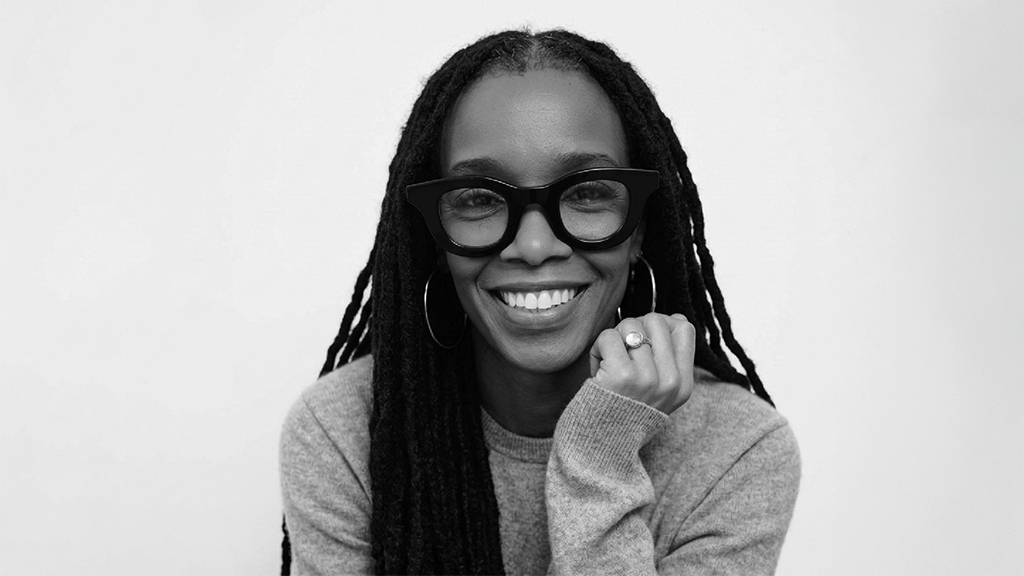
If you could attribute one other person or life event to your success, who or what would it be?
Besides my mother, I would say it was my high school ROTC instructor, Sergeant Mitchell. One afternoon he asked our unit a simple question: “What is leadership?” One eager cadet shot his hand up and said, “Getting people to do what you want them to do.” Sergeant Mitchell replied. “That’s only half right.” He said, “Leadership is getting people to do what you want them to do because they want to do it. And the ‘because they want to do it’ part? That’s your responsibility.”
I’ve carried that lesson through every stage of my career. Anyone can lead with authority. Titles make people comply. Influence makes people believe. That is the difference.
The best ideas don’t happen because someone is afraid of disappointing their boss. They happen because a team believes the mission is worth chasing.
That’s still the leader I aspire to be. Not someone who tells people what to do, but someone who creates an environment where people want to do their very best work.
What’s the number one quality you look for in talent?
Curiosity. Not talent. Not technical skill. Curiosity. I can teach Photoshop. I can teach prompting. I can teach presentation skills. I can’t teach someone to genuinely wonder why.
The best creatives I’ve ever worked with are relentless. They keep pulling on the thread until they find the real problem hiding underneath the brief. They’re the people who ask one more question. Read one more article. Explore one more culture. Learn one more skill.
You never have to motivate curious people. Curiosity is self-propelled. And in an industry changing as quickly as ours, that’s more valuable than that.
What’s the best career advice you’ve ever received?
Don’t try to be irreplaceable. Be indispensable. There’s a difference. If you’re irreplaceable, congratulations. You’ve just guaranteed yourself the same job forever. Organizations don’t promote people they can’t afford to lose. Being indispensable is different. It means your value isn’t tied to doing every task yourself. It’s tied to making everyone around you better. It means building successors. Giving your team the client exposure. Sharing information instead of hoarding it. Creating opportunities instead of protecting territory.
You don’t have to be in every meeting. You don’t have to have the last word. But when the hardest decision walks into the room, people know exactly whose perspective they trust. That’s indispensability.
What part of leadership do you find most rewarding?
Watching someone realize they’re better than they thought they were. That’s the moment I chase. I love seeing someone who once second-guessed every creative decision eventually walk into a room and confidently defend their thinking.
My job isn’t to create great work. My job is to create more people capable of creating great work. That means creating an environment where people can experiment, fail safely, recover quickly, and trust their instincts. I don’t want my team depending on me. I want them outgrowing me. Because when that happens, the work gets better. The culture gets stronger. And everyone wins.
What are you most proud of over the last 12 months?
For the last two years I’ve been obsessed with one question: Can we predict human behavior before it becomes obvious? Not with demographics. Not with surveys. With emotional signals. I’ve been building a system that identifies emerging human tensions, uncovers the emotional forces behind them, and predicts how people are likely to behave six to twelve months from now if brands ignore those signals. When I wanted to do something like this, the technology barely existed. Now it does. But here’s what I’ve learned. AI wasn’t the breakthrough. The breakthrough was having a point of view. Technology didn’t invent my strategy. It amplified it. And after two years of wanting to design it, I’ve finally created something I’m incredibly proud of.
What’s been the most challenging moment in your career?
The biggest challenge hasn’t been a moment. It’s been a mindset. Pharmaceutical advertising is one of the most regulated creative industries in the world. Many people see those regulations as limitations. I’ve learned to see them as design constraints. There’s a Louis Vuitton store on Fifth Avenue in New York that perfectly captures this philosophy.
When the building needed scaffolding, they couldn’t avoid New York City’s regulations. But instead of hiding behind ugly construction fencing and green mesh, they transformed the scaffolding into a monument. A giant stack of Louis Vuitton monogramed trunks. Tourists take photos in front of it thinking it is a beautiful tourist attraction unaware that it is just LVs version of scaffolding
Same rules. Completely different imagination. That’s how I think about pharmaceutical creativity. In Pharma, the FDA gives us guardrails, our version of scaffolding. But creativity has never been about having no constraints. It’s about creating something so compelling that people stop seeing the constraints altogether. The goal isn’t to escape the box. The goal is to make it the most beautiful box anyone has ever seen.